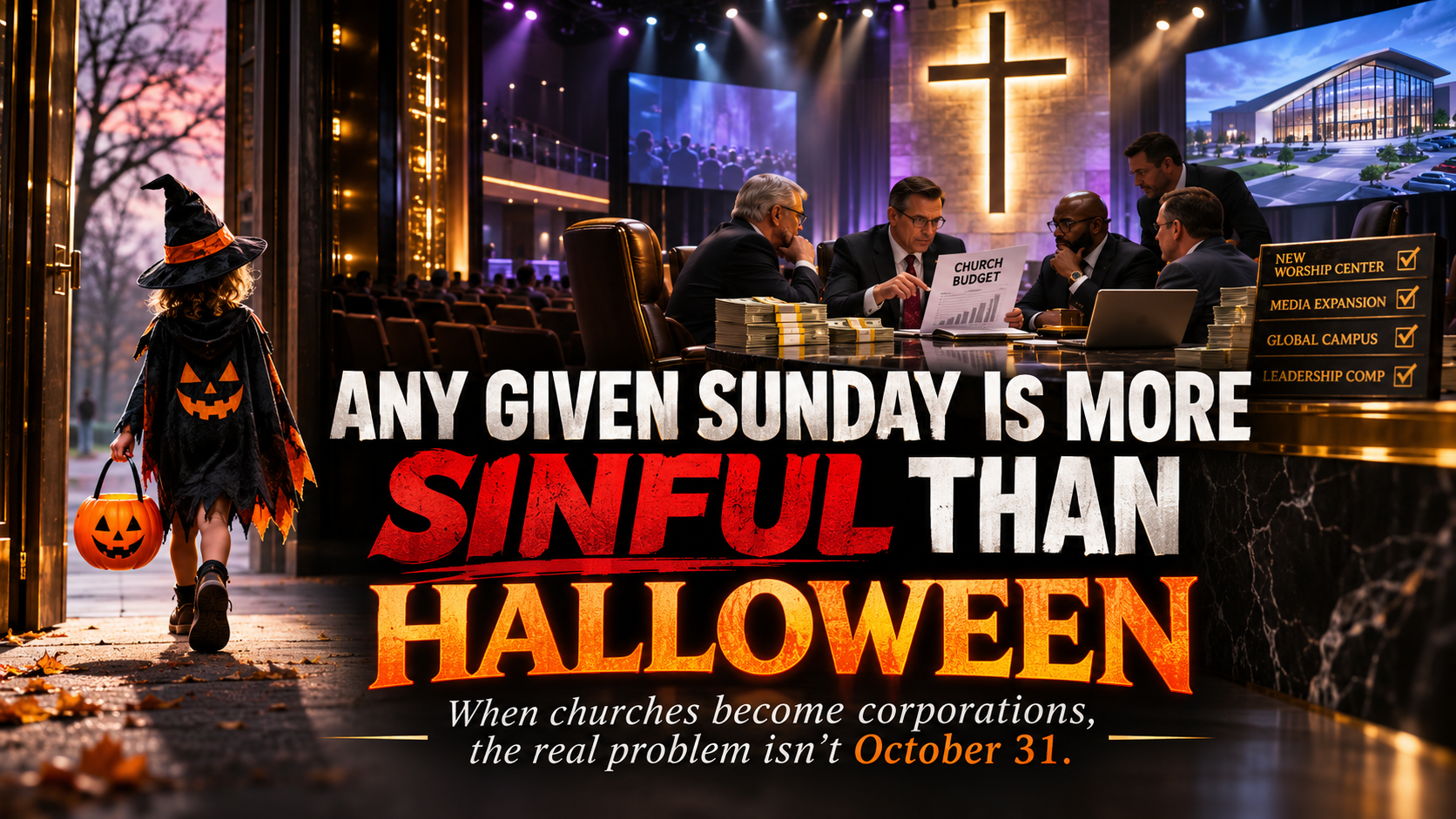
3. Paul Already Addressed the Halloween Debate
In 1 Corinthians 8–10, the Apostle Paul addresses a controversy involving meat sacrificed to idols. Some Christians believed eating the meat was wrong because they believed in their hearts that other gods existed besides God, which led to them having a problem with meat they saw as associations with pagan worship. Other Christians recognized that idols weren't real or genuine gods and that therefore the “pagan” meat itself wasn't inherently sinful.
Paul distinguishes between consuming ordinary food and participating in actual idolatry. He also instructs Christians to consider their consciences, the consciences of others, and what their actions communicate. Romans 14 develops similar principles on disputable matters.
Paul writes: "Each one should be fully convinced in his own mind" (Romans 14:5).
In other words, Christians shouldn't violate their consciences. But neither should they turn personal convictions into universal commandments where scripture hasn't done so.
If you believe participating in Halloween dishonors God, don't participate. If someone else allows their kids to dress up, don't automatically assume they're celebrating demons. Things like costumes and parties don’t become necessarily or inherently sinful because it's October 31. And candy doesn't become an offering to Satan because someone hands it to a child on Halloween.
The date itself isn't the issue. Context matters.
If Halloween celebrations in your community involve genuine occult worship, participating would communicate approval of religious practices incompatible with Christ.
Paul's instructions in 1 Corinthians 10 are especially relevant here. Christians must consider if their actions create confusion about their allegiance to Jesus. But the same principle should apply when we enter a church building on Sunday.
So, what has our participation communicated when we knowingly finance church corporations that exploit believers, neglect the poor, and enrich their leadership?
If we're going to be concerned about the religious significance of participating in Halloween, shouldn't we be equally concerned about participating in churches ran like businesses, which is basically every church in America? Why should Christians scrutinize the spiritual implications of a costume while ignoring the spiritual implications of our weekly offering and how our pastors steward our finances and tithes?
Of course, Christian liberty doesn't excuse Halloween sin—or church sin.
Again, I'm not arguing that Halloween is always harmless.
Some things associated with Halloween involve practices Christians should reject. Occult worship, divination, sorcery, and deliberate celebrations of evil are incompatible with biblical faith. And in communities where Halloween is closely tied to these practices, Christians should be especially careful about what their participation communicates.
Christian liberty doesn't make sin acceptable.
But church tradition, blind obedience, or failing to think critically about what you're supporting doesn't make sin holy. Sin doesn't become righteousness just because it happens on Sunday. And giving doesn't automatically become generosity because the money passes through an offering plate, funds one or two respectable charitable causes each year—as though a church deserves applause for occasionally doing what Christ commanded it to do—or makes you, your pastor, or your church look and feel good about yourselves. An occasional act of charity doesn't sanctify a church whose financial priorities place its own comfort and survival above the people it's supposed to love.
4. Jesus Wasn't Nearly as Concerned About Pagan Celebrations as He Was About Corrupt Religion
Where did Jesus direct His harshest criticisms?
It wasn't toward kids enjoying cultural festivities. It wasn't toward ordinary people struggling to understand religious traditions. It wasn’t toward Gentile pagan celebrations.
Again and again, Jesus confronted religious leaders.
He denounced their hypocrisy. He condemned their greed. He exposed leaders who placed unbearable burdens on others. He challenged people who used religious authority for their own benefit. And when He entered the temple and found commerce corrupting its sacred space, He overturned tables and said, "My house shall be called a house of prayer, but you make it a den of robbers” (Matthew 21:13).
Think about that.
Jesus didn't simply object to the existence of money near the temple. He objected to what was happening to a place intended for worship. Religious life had become entangled with financial interests in ways He condemned. Now consider the modern church.
How many churches have become financial machines that require a constant stream of offerings to sustain their operations? How many pastors have become chief executives whose primary responsibilities involve managing budgets, facilities, staff, and institutional growth? How many churchgoers are being financially exhausted to preserve the organizations supposedly established to serve them? And how many Christians have been taught that questioning any of this amounts to rebellion against God?
Jesus overturned tables in a religious establishment that had corrupted worship with business. Today, some Christians would accuse Him of being divisive for disrupting the church's revenue stream.
Look, the church budget exposes the real heart problem.
Have you ever opened your church's annual financial report?
You see the total offerings collected. Then you look at the expenditures: leadership compensation, administrative salaries, building expenses, maintenance, insurance, utilities, debt payments, marketing. And somewhere among all those expenses, perhaps there's a line item for benevolence.
Maybe a little money for helping struggling families. Maybe something for the poor. Proportions reveal priorities, and bad priorities are difficult to reconcile with the ministry of Jesus.
When a huge percentage of a congregation's offerings goes toward securing the salaries, lifestyles, and financial comfort of its leadership, it should raise more than eyebrows. Especially when you consider how Jesus lived, how He handled money, and how radically He called His followers to be poor and sacrifice material security for the sake of the Kingdom.
Imagine being told you have a spiritual heart problem because you can't afford to increase your offering. Meanwhile, pastor's salary is protected. Building's operating expenses are protected. Organization’s future is protected. But struggling families aren’t protected.
Maybe the heart problem isn't with the people reluctant to give. Maybe it's with the people who have decided where the giving goes. And before someone accuses me of attacking pastors, let me make something clear—the problem isn't paying pastors.
The problem is employing pastors, which turns churches into businesses that exist to sustain the pastors. The problem is when the financial needs of the organization always and consistently outweigh the needs of the people. The problem is when money given in the name of Jesus becomes a tool for saving accounts rather than serving the mission of Jesus.
That isn't stewardship. It's institutional self-preservation dressed up in religious language.
