INTRODUCTION
Go on YouTube, find a popular church channel, and fire up the livestream.
Countdown ends. Music fades.
Camera cuts to a cool-looking pastor wearing branded clothing, fashionable sneakers, and a perfectly casual outfit as his nice Sunday wardrobe.
He smiles. A pep in his step, he bounces and leans toward the camera speaking with a fun combination of excitement, nervous energy, rehearsed humility, and carefully timed pauses. He stutters just enough to appear spontaneous and chuckles at nothing in particular. He acts almost embarrassed by how happy he is to see you.
“Hey, church family! Welcome! Man, we're so glad you're here! In case we haven't met, I’m Pastor Joe, and I have the incredible privilege of being the Campus Pastor here at Mega Church. Listen, wherever you're watching from—if you're on your couch, in your car, or grabbing some coffee—we're just so honored that you would take a little time out of your weekend to hang out with us. Seriously, we love you guys!”
You change the channel to a local church, a church not as big as Mega Church. And meet Pastor Jeff saying the same thing in his own way.
Same smile. Same look. Same laughter.
Same practiced spontaneity. Same relatable demeanor.
Same blend of salesman enthusiasm and pastoral tenderness, where friendly smiles and affectionate words masquerade as biblical kindness and hospitality, masking you pastor’s greed and making him feel like a real shepherd to you, when he’s not.
Little do you know, your pastor’s a wolf (Matthew 7:15).
The gospel is in the age of the pastoral salesman.
Pastors are the church equivalents of snack and snake-oil salesmen. They pimp out churchgoers and sell worship experiences to tithing customers, preaching a rich gospel that comes straight out of corporate America.
He never shepherded. He’s always been a brand ambassador. Preaching gets him paid.
The congregation listens to him because they’re his loyal audience.
Visitors become potential customers. Church membership becomes customer retention.
Ordinary things like smiling, dressing nice, welcoming new faces, and following traditions have become ingredients in a calculated performance designed to attract and cultivate a following. Sincerity, his style. Humility, his technique. Authenticity, his marketing strategy.
The most remarkable part?
His performance is supposed to convince you there isn't a performance at all.
He wants to look like sheep—humble, unscripted, approachable, loving.
Even his personal stories make him seem vulnerable.
Every element communicates the same message: I'm just sheep like you.
Except he's paid to go on stage and speak to you. Under professional lighting. Speaking into cameras ran by his production team. Sermons ready to get the most likes on social media, with his whole ministry dependent on commercial persuasion.
The apostles didn’t want their preaching confused with traveling philosophers, religious profiteers, or clever speakers who made their living by winning audiences. Paul said, “For we are not, like so many, peddlers of God's word, but as men of sincerity, as commissioned by God, in the sight of God we speak in Christ” (2 Corinthians 2:17).
But what are “peddlers of God’s word”? And how do they handle God’s gospel?
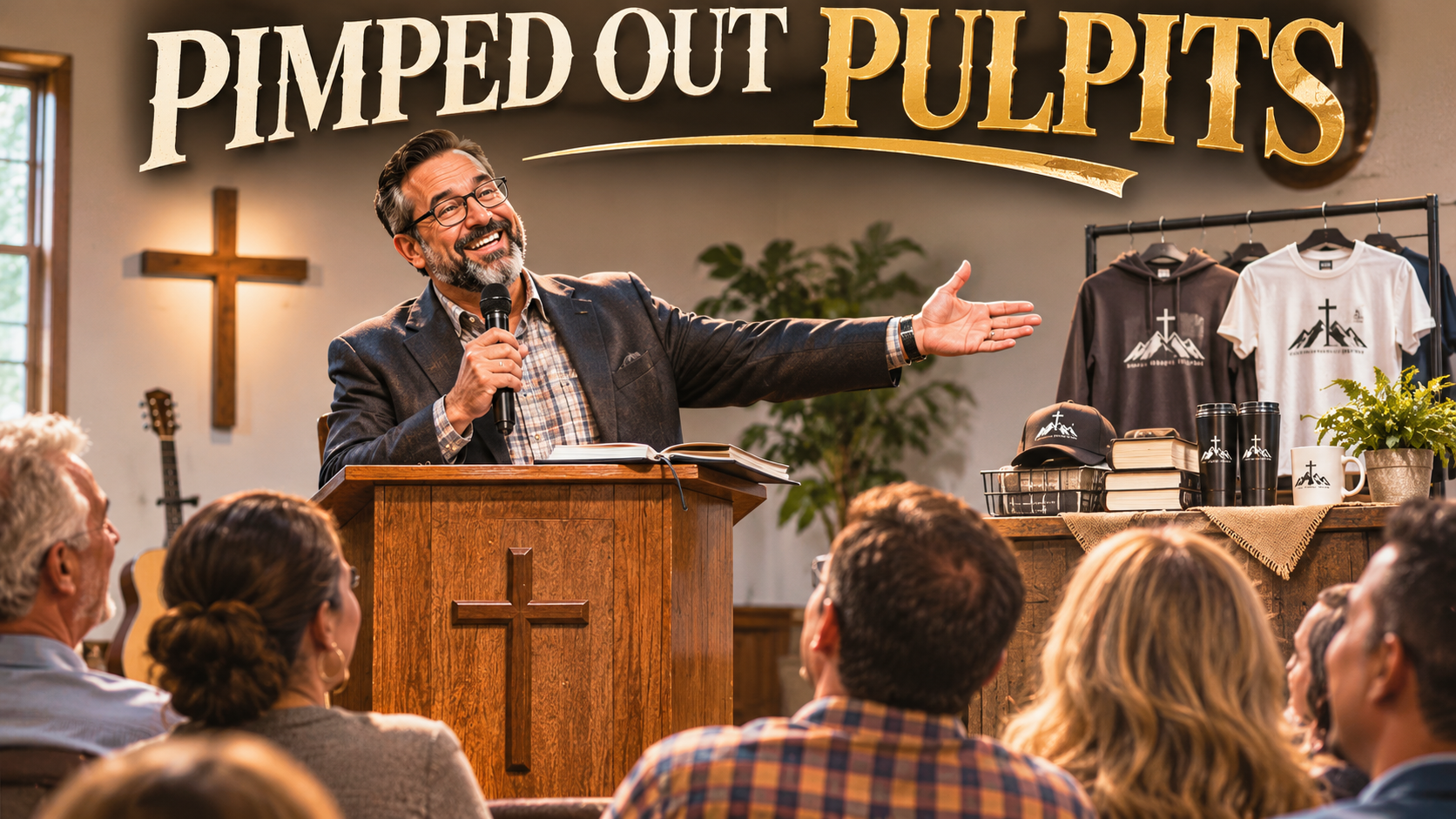
That’s what our PIMPED OUT PULPITS series is all about.
